
Publications Archive :
| Search By Category : | |
| Search By Topic : | |
| Search By Author : | |
http://jcpa.org/article/the-palestinian-refugees-on-the-day-after-independence-3/
06/12/2010 According to the Palestinian consensus, non-implementation of the right of return will leave open the gates of the conflict with Israel. This implies justification for the continued armed struggle against Israel even following the establishment of a Palestinian state. Furthermore, the Arab Peace Initiative does not envision the Palestinian refugees being resettled in a West Bank and Gaza Palestinian state. |
|||||
http://jcpa.org/article/averting-palestinian-unilateralism/
23/11/2010 A unilateral declaration of statehood, instead of a negotiated solution to the conflict, would not only be a treaty violation, but could affect international reactions to the newly created Palestinian state. According to the Restatement of the Foreign Relations Law of the United States, a state is required not to recognize or treat as a state any entity which has “attained the qualifications of statehood in violation of international law.” |
|||||
http://jcpa.org/article/govt-rejects-extended-settlement-freeze/
17/09/2010 Despite considerable pressure from both the US and Egypt to continue the settlement construction moratorium for another three months, Prime Minister Binyamin Netanyahu’s senior ministers, a forum known as the septet, decided this week not to extend the freeze. |
|||||
http://jcpa.org/article/is-israel-a-colonial-state-the-political-psychology-of-palestinian-nomenclature/ 
02/08/2010 The argument claiming that Israel has colonialist roots due to its connection with the British Mandate is ironic, as most Arab countries owe their establishment to conquest and control by the European powers. Prior to the First World War, countries such as Iraq, Syria, Lebanon and Jordan did not exist at all and were merely provinces of the Ottoman Empire. They became states only as a result of European intervention. |
|||||
http://jcpa.org/article/why-are-the-palestinians-opposed-to-ending-the-occupation/ 
22/07/2010 Foreign Minister Lieberman’s plan to assist the Gaza Strip in becoming an independent entity has encountered wall-to-wall Palestinian opposition. The dual-headed Palestinian regime in Ramallah (Fatah) and in the Gaza Strip (Hamas) totally rejects Lieberman’s proposal to recruit the European Union to build power stations to supply electricity, desalination stations and a sewage treatment plant. This was to be part of a plan that would totally sever all connections with Israel, which would forego its naval supervision over merchandise entering the port of Gaza and would totally seal the border with the Gaza Strip. |
|||||
http://jcpa.org/article/the-legal-basis-of-israel%E2%80%99s-naval-blockade-of-gaza/ 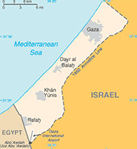
19/07/2010 A ship that clearly intends to breach a lawful blockade may be stopped when it is still on the high seas. Stopping the flotilla heading for Gaza in international waters 100 kilometers from Israel was not illegal; in time of armed conflict, ships intending to breach the blockade may be searched even on the high seas. Israel is in full compliance with international law because it fulfilled all of the conditions for a lawful blockade. |
|||||
http://jcpa.org/article/precision-guided-or-indiscriminate/ 
06/07/2010 This study analyzes the reporting of Amnesty International and Human Rights Watch regarding the 2008-2009 conflict in Gaza and southern Israel. Their factual and legal claims, particularly relating to Israel’s use of white phosphorus and UAVs, are considered in light of military sources, state doctrine, and the academic literature. The analysis demonstrates that many of the NGOs´ factual claims are contradicted by expert sources, and that in numerous instances their presentation of international law is inaccurate or incomplete. |
|||||
http://jcpa.org/article/who-will-keep-the-peace/ 
24/06/2010 The conventional wisdom is that the success of a future peace agreement |
|||||
http://jcpa.org/article/analysis-the-blockade-on-gaza/ 
24/06/2010 Israel, as a democratic State, looks for legal tools to curb such smuggling and respond to Hamas’ terrorist attacks against its citizens. One of the tools available under international law is the maritime blockade. Israel, finding itself in a state of armed conflict with Hamas, has opted to employ this legal measure. |
|||||
http://jcpa.org/article/israels-blockade-stands-the-test-of-international-law/
10/06/2010 What does international law have to say about blockades against rogue enterprises? |
|||||
http://jcpa.org/article/are-the-settlements-illegal/ 
17/03/2010 Israeli settlements in the territories that came under Israeli control as a result of the June 1967 war have long been a subject of often highly emotional debate within the United States, Israel and the international community. The Obama Administration’s decision to focus on settlements right out of the gate heightened attention on this already salient issue, but it is by no means clear that heightened attention will by itself facilitate resolution of the Palestine/Israel problem. Settlements are handy for obscuring the fundamental issue. |
|||||
http://jcpa.org/article/is-israel-a-colonial-state-the-political-psychology-of-palestinian-nomenclature/ 
14/03/2010 Israel’s creation, far from being a foreign colonial transplant, can actually be seen as the vanguard of and impetus for decolonization of the entire Middle East, including a significant part of the Arab world. It is not popularly recognized how the Arab world benefited from the Balfour Declaration, which served to advanced their own independence from the colonial powers of England and France. |
|||||
http://jcpa.org/article/demography-geopolitics-and-the-future-of-israels-capital-jerusalems-proposed-master-plan/ 
04/03/2010 The Jewish majority in Jerusalem is declining, meanwhile, according to the proposed plan for the city, there will not be sufficient Jewish housing by 2020 or Arab housing by 2030. The plan also calls for creating urban contiguity between eastern Jerusalem and Palestinian neighborhoods outside the city, reinforcing Palestinian demands to recognize the West Bank and eastern Jerusalem as a single political entity. |
|||||
http://jcpa.org/article/a-moral-evaluation-of-the-gaza-war-%E2%80%93-operation-cast-lead/ 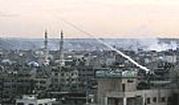
04/02/2010 In Israel, a combatant is a citizen in uniform. His state ought to have a compelling reason for jeopardizing his life. There is no army in the world that will endanger its soldiers in order to avoid hitting the warned neighbors of an enemy or terrorist. Israel should favor the lives of its own soldiers over the lives of the well-warned neighbors of a terrorist when it is operating in a territory that it does not effectively control, because in such territories it does not bear the moral responsibility for properly separating between dangerous individuals and harmless ones. |
|||||
http://jcpa.org/article/proportionality-in-asymetrical-wars/ 
02/02/2010 As the uses of force in Somalia, Kosovo, and Iraq show, Western armies are very concerned about protecting the lives of their soldiers, and to that end are willing to risk many civilian lives. They also find acceptable the notion that civilian lives can be forfeited in order to attain important military goals. |
|||||
|